




Board game components: what they are and how they influence mechanics
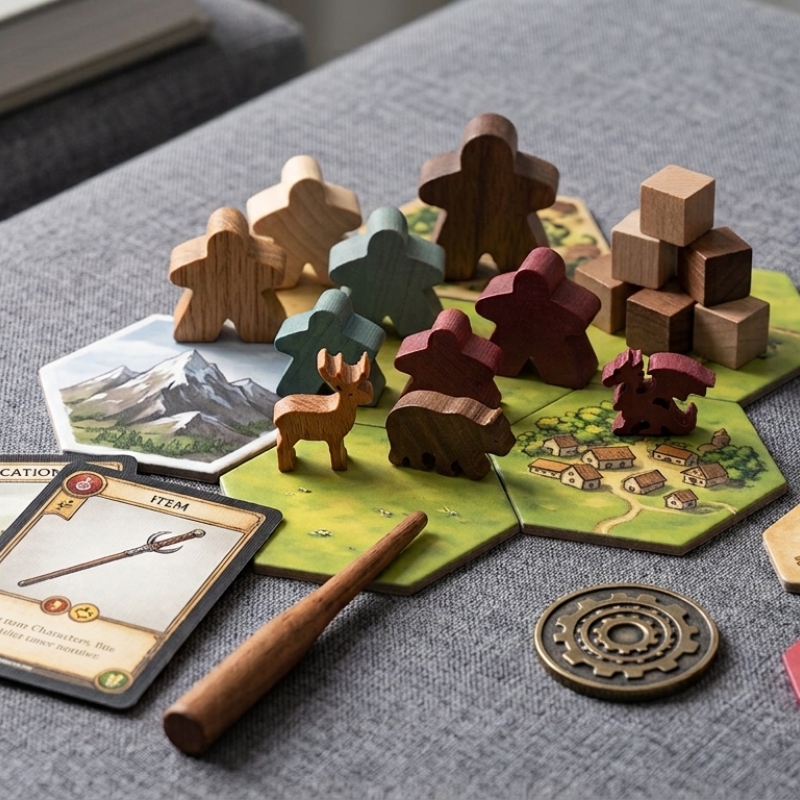
When we open a board game, we find cards, dice, tokens, miniatures, tiles, game boards, and many other elements. At first glance, they might seem like mere playing pieces, but board game components fulfill a much more vital role: they are the physical tools through which rules and mechanics come to life on the table.
A die can be rolled to resolve combat, determine random outcomes, or measure push-your-luck risks. A meeple can represent a worker, while a card can build a deck, manage resources, activate powerful abilities, or unfold a narrative arc.
Because of this, components and mechanics share an intricate relationship. Game designers determine which physical objects are required to execute the rules, ensuring every component reinforces the theme and overall gameplay experience.
What is the Relationship Between Components and Mechanics?
Components are the physical objects manipulated during a session, while mechanics are the underlying rule systems that dictate how players interact with them. It is important to distinguish between these two concepts.
A single component type can drive entirely distinct mechanics. Cards, for instance, can form the core of a deck-building engine, drive a card-drafting system, enable hand management, or represent characters and event triggers.
The same versatility applies to dice. They can be used purely to introduce probability, resolve military skirmishes in a wargame, or generate numeric values to be managed in a Roll & Write game.
A simple way to understand this connection is:
Component → Physical Function
Mechanic → Gameplay Experience
A wooden meeple physically occupies a space on the board; that physical act represents a worker placement mechanic, forcing players to evaluate which actions to claim and which options to leave open for rivals.
To dive deeper into game design systems, explore our Comprehensive Guide to Board Game Mechanics.
What Are the Main Types of Board Game Components?
Modern tabletop games utilize a vast array of materials, and there is no single standard combination for every title. Some games rely almost exclusively on card decks, while others feature modular boards, detailed miniatures, custom dice, or hundreds of individual tokens.
Common board game components include:
- Dice
- Cards
- Tokens and Markers
- Meeples and Pawns
- Miniatures
- Tiles
- Game Boards and Maps
- Trackers, Cubes, and Discs
- Dials and Wheels
- Scorepads and Player Sheets
- Coins and Resource Tokens
- Scenery and Terrain Elements
Below is a breakdown of key components and how they function alongside modern game mechanics.
Dice: Probability, Risk Management, and Action Resolution
Dice are among the most iconic tabletop components. While traditionally used for random outcome generation, their application extends far beyond rolling to move across a track.
In many games, dice resolve combat or determine action success rates. In others, they act as variable workers or resource generators. They are essential to Push Your Luck mechanics, where players choose whether to bank their current gains or risk rolling again for higher rewards.
In wargames, dice simulate tactical friction and the fog of war, determining whether a unit scores a hit, inflicts damage, or passes a morale test.
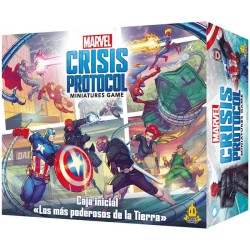
Example: Marvel Crisis Protocol. This miniature skirmish game uses custom dice to resolve attack and defense rolls between iconic superheroes, providing a dynamic resolution system.
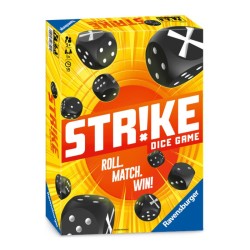
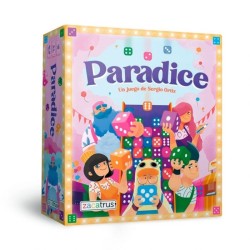
Dice can also serve as the main attraction of a game. In titles like Strike, dice rolls directly dictate player options and elimination rounds.
Cards: Versatility and Engine Building
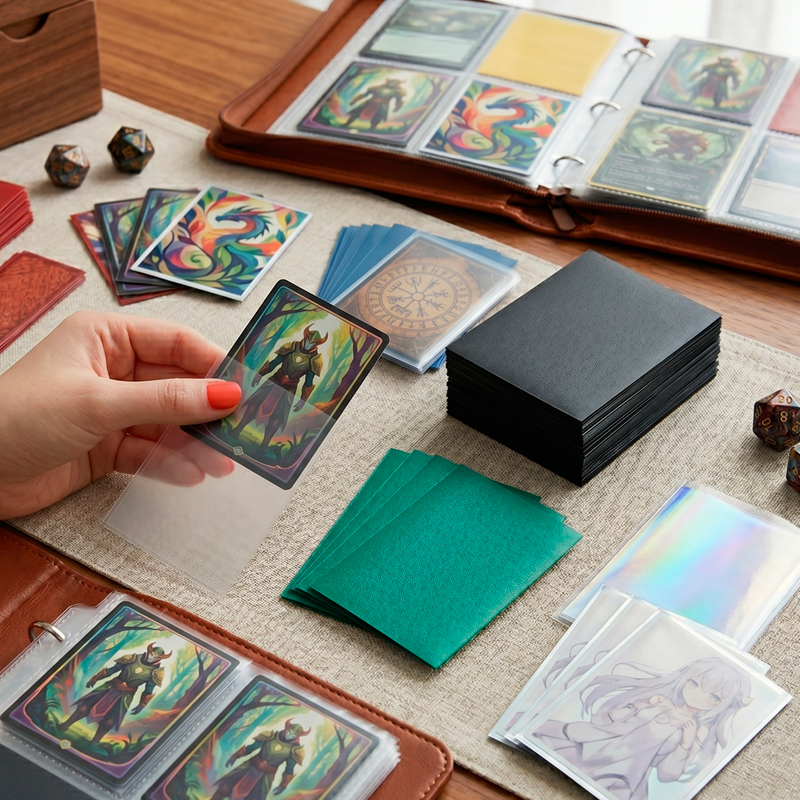
Cards are arguably the most multi-functional component in gaming. They can represent units, currency, actions, equipment, map sectors, or story events.
They drive major mechanics including deck-building, drafting, and hand management. In a deck-building game, players start with basic cards and purchase stronger options to refine their deck engine over time. In a drafting system, players pick one card from a hand and pass the remaining cards to an opponent, creating shared-pool strategy.
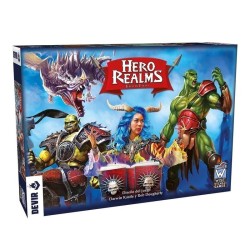
Example: Hero Realms. Cards form the core deck-building engine, allowing players to acquire combat and economy cards to overpower their opponent.
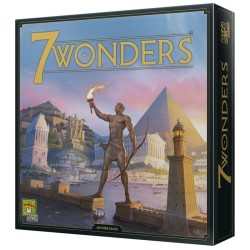
Example: 7 Wonders. Utilizes card drafting as its primary mechanic. Players pass hands of card structures around the table to build ancient civilizations simultaneously.
Tokens and Markers: Tracking Resources, States, and Progress
Tokens and markers fulfill essential administrative roles. They denote resources, victory points, health damage, status conditions, objectives, and temporary board effects.
Their primary advantage is replacing mental tracking or pen-and-paper recordkeeping with tangible visual cues. A pile of tokens easily represents gold, food, influence, or action usage.
In resource management games, collecting and spending physical tokens provides immediate tactical clarity regarding a player's available wealth and engine output.
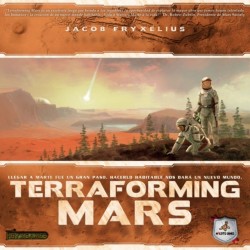
Example: Terraforming Mars. Features metallic and colored resource cubes to track credit, steel, titanium, plant, energy, and heat production, making engine management clearly visible.
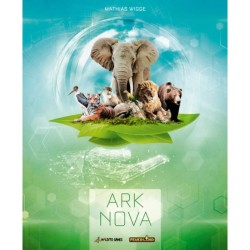
Example: Ark Nova. Employs specialized tiles and markers to track money, zoo reputation, conservation points, and enclosure sizes.

Meeples and Pawns: Representing Workers and Characters
The meeple is an iconic symbol of modern Eurogame design. Typically crafted from painted wood, these stylized human figures represent workers, specialists, or player avatars.
Meeples are foundational to the worker placement mechanic. Players place meeples onto limited board action spaces to claim resources or construct buildings, physically blocking opponents from taking those same actions for the round.
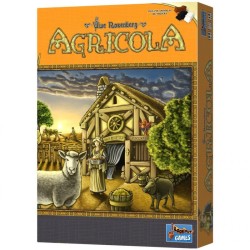
Example: Agricola. Players assign family member meeples to board spaces to collect wood, plow fields, build fences, or breed livestock.
Meeples can also function as position markers or character avatars rather than static workers.
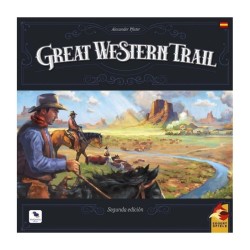
Example: Great Western Trail. Uses custom wooden pieces to represent specialized cattlemen, craftsmen, and engineers moving along the trail map.

Miniatures: Immersion, Scale, and Table Presence
Miniatures provide detailed 3D physical representations of heroes, monsters, army units, or vehicles. While mechanically equivalent to cardboard standees or wooden pawns, miniatures elevate tactical vision and thematic immersion.
They are widely used in adventure board games, dungeon crawlers, narrative campaign games, and skirmish wargames, where line of sight, range measurement, and physical positioning are critical.
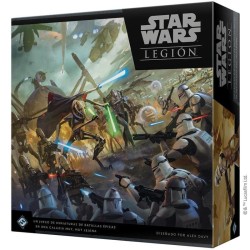
Example: Star Wars: Legion. Highly detailed plastic miniatures represent infantry squads and vehicles deployed across battlefields, forming the visual core of tactical movement and combat.
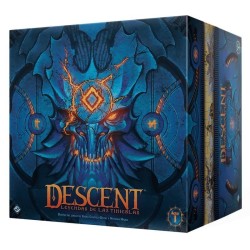
Example: Descent: Legends of the Dark. Integrates detailed hero and monster miniatures with 3D cardboard terrain pieces to bring dungeon exploration to life.
Tiles: Modular Map Building and Spatial Puzzles
Tiles are sturdy cardboard or wooden pieces used to assemble dynamic game boards, paths, or structures during play. Rather than using a static board, tile-laying mechanics allow maps to expand and alter each session.
Tile placement requires spatial planning, as tile orientation affects scoring routes, territory control, or map exploration.
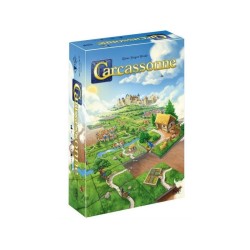
Example: Carcassonne. Players draw and place land tiles turn by turn to build roads, cities, monasteries, and fields, scoring points with placed meeple followers.
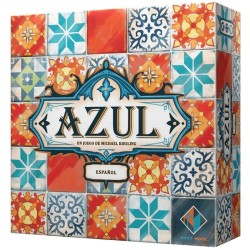
Example: Azul. Players draft colored Bakelite-style tiles to complete wall patterns on personal player boards, balancing scoring options against opponent drafting denial.
Game Boards and Maps: Defining Spatial Strategy
The game board is far more than a backdrop; it acts as an active constraint system defining allowable movement routes, territorial boundaries, and action availability.
In area control and route-building games, board geography drives player interaction, conflict, and economic engine performance.
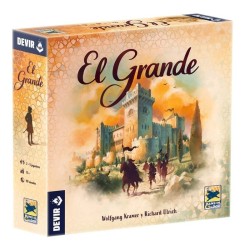
Example: El Grande. The map of medieval Spain serves as the central battlefield where players compete for regional troop dominance and area majorities.
Example: Great Western Trail. The main board displays a cattle trail path where player actions change dynamically based on neutral and player-built structures along the route.
Cubes, Discs, and Trackers: Streamlining Board State Information
Wooden cubes, discs, and plastic markers provide lightweight tracking solutions. They mark region influence, player turn order, resource tracks, victory points, and tech tree progression.
Their compact size makes them popular in economic Eurogames for displaying complex statistical data without cluttering the play surface.
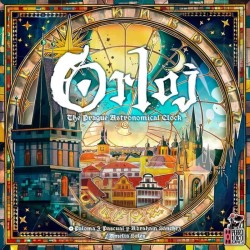
Example: Orloj: The Prague Astronomical Clock. Employs precision discs and markers to track player actions and astronomical clock movement across interconnected wheels.
Dials and Wheels: Managing Dynamic Variables
Dials and rotating wheels offer an efficient way to track continuously changing numeric values—such as health pools, victory points, hidden bids, or game rounds—without requiring dozens of loose counters.
Players adjust values by rotating a plastic or cardboard wheel, keeping table setups tidy and reducing component management overhead.
Example: Wavelength. Features a unique mechanical dial mechanism to hide and reveal target spectrum zones during clue interpretation.

Scorepads and Player Sheets: Pen-and-Paper Integration
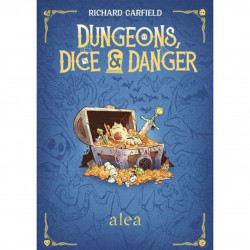
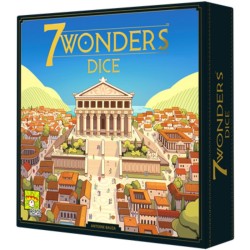
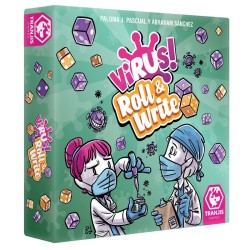
Scorepads and player sheets are central to Roll & Write and Flip & Write games, where players record dice or card outputs directly onto individual play sheets.
The sheet serves as a personal strategic board where players cross off boxes, build engine combos, and manage end-game scoring tracks.
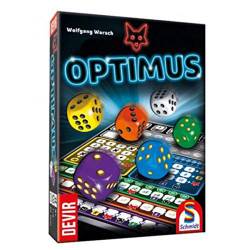
Example: Optimus. Players mark off dice values across colored scoring areas on their sheet to trigger chain-reaction bonuses.
Coins and Physical Resources: Tangible Value Representation
Coins and custom resources represent economic wealth, raw materials, or currency pools required to construct buildings, purchase cards, or hire units.
Whether made of cardboard, wood, or metal, physical resource tokens allow players to assess economic strength at a glance.
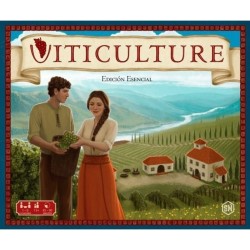
Example: Viticulture Essential Edition. Features custom glass drops representing grape and wine tokens alongside coins used to invest in vineyard structures.
Standard vs. Deluxe Editions: What Is the Difference in Materials?
Board games vary in production value depending on edition tier. Standard editions feature functional, high-quality components made from sturdy cardboard, wood, paper, and molded plastic.
Deluxe editions upgrade these base components with premium materials: thicker dual-layer boards, custom-sculpted wooden resource tokens, metal coins, pre-shaded miniatures, screen-printed meeples, or linen-finish foil cards.
However, a Deluxe edition does not alter fundamental gameplay mechanics. Deluxe upgrades focus on enhancing table presence, tactile satisfaction, visual appeal, and long-term component durability.
Can You Buy Board Game Components and Accessories Separately?
Yes. Standalone components, upgraded accessories, and replacement parts are widely available for custom game design, replacing lost pieces, or upgrading base games.
Custom dice sets are extremely popular, available in various colors, sizes, and polyhedral configurations for RPGs, wargames, and board games.
Miniatures, scenery terrain, card sleeves, playmats, and token organizers allow players to customize their tabletop setups. In wargaming, purchasing standalone terrain, paint sets, and miniature units is a core hobby activity.
At El Taller del Modelista, we supply an extensive catalog of tabletop components, dice sets, miniatures, paint accessories, and wargaming supplies to upgrade your favorite titles.
Explore our main categories for board games, miniature games & wargames, and gaming accessories to find the perfect addition to your table.
Do Components Improve the Overall Gaming Experience?
Quality components enhance overall player engagement across three main areas:
- Functionality & Clarity: Well-designed components make board state information easy to read and streamline action execution.
- Thematic Immersion: Detailed miniatures, thematic resources, and evocative map art draw players directly into the world of the game.
- Tactile Feedback: Handling high-quality wooden, acrylic, or metallic pieces creates a satisfying physical experience that rewards strategic plays.
Frequently Asked Questions About Board Game Components
What are board game components?
Board game components are all the physical items contained within a game box used to execute play, including cards, dice, tokens, miniatures, tiles, boards, meeples, and resource markers.
What is the difference between components and mechanics?
Components are physical objects, whereas mechanics are the rule systems governing how those objects are manipulated. The same component (e.g., a card) can power multiple different mechanics (e.g., deck-building, drafting, hand management).
What is a meeple?
A meeple is a stylized wooden figure representing a human worker, character, or unit on a game board. It is widely recognized as a symbol of modern tabletop gaming and worker placement games.
What are tokens used for in board games?
Tokens act as physical counters to represent dynamic game states such as accumulated resources, victory points, health damage, action limitations, and status effects.
Which components are most common in wargames?
Wargames rely heavily on miniature figures or unit counters, polyhedral dice for attack/defense resolution, tactical terrain maps, and tracking tokens for morale, movement, and damage.
What is the difference between Standard and Deluxe board game editions?
Deluxe editions replace standard cardboard or wooden pieces with premium materials like metal coins, dual-layer boards, sculpted resource tokens, pre-painted miniatures, or custom organizers, keeping base rules unchanged.
Can I purchase replacement dice, tokens, and miniatures separately?
Yes. Specialized hobby stores sell standalone dice, generic resource tokens, terrain pieces, and unpainted miniatures to replace lost parts, upgrade components, or build custom games.
Do components dictate a game's mechanics?
Not directly. Designers choose components to support intended mechanics. The game's rules determine how physical pieces are integrated into strategic systems.
Components as an Essential Part of Game Design
While theme, artwork, and rule systems capture attention on the shelf, physical components determine how intuitive and enjoyable a game feels during active play.
From dice rolls introducing tension to tile placement shaping modular worlds, every physical element works alongside the rulebook to deliver an engaging tabletop session.
Explore the full selection of board games, miniatures, wargaming supplies, and accessories at El Taller del Modelista to equip your table with top-tier gaming gear!
Share this content