 search
 search




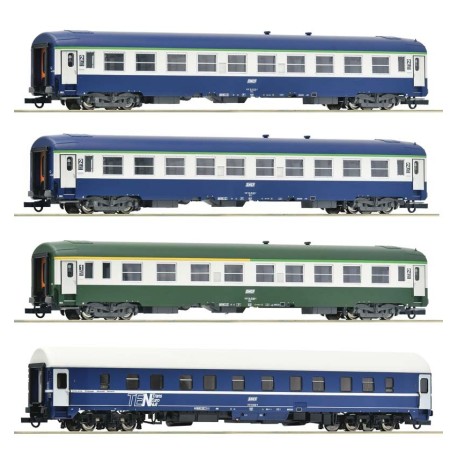
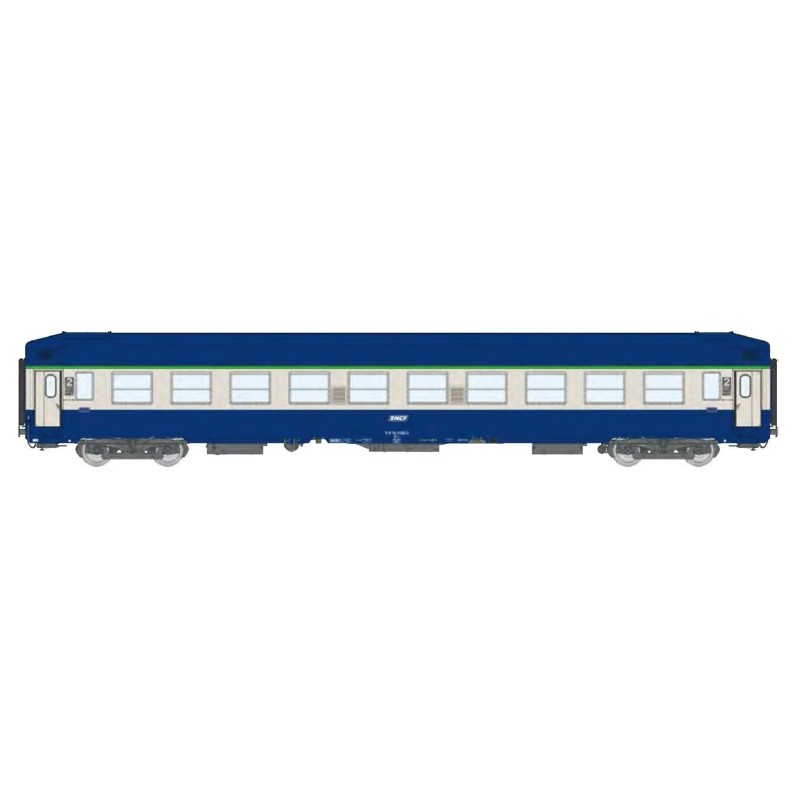
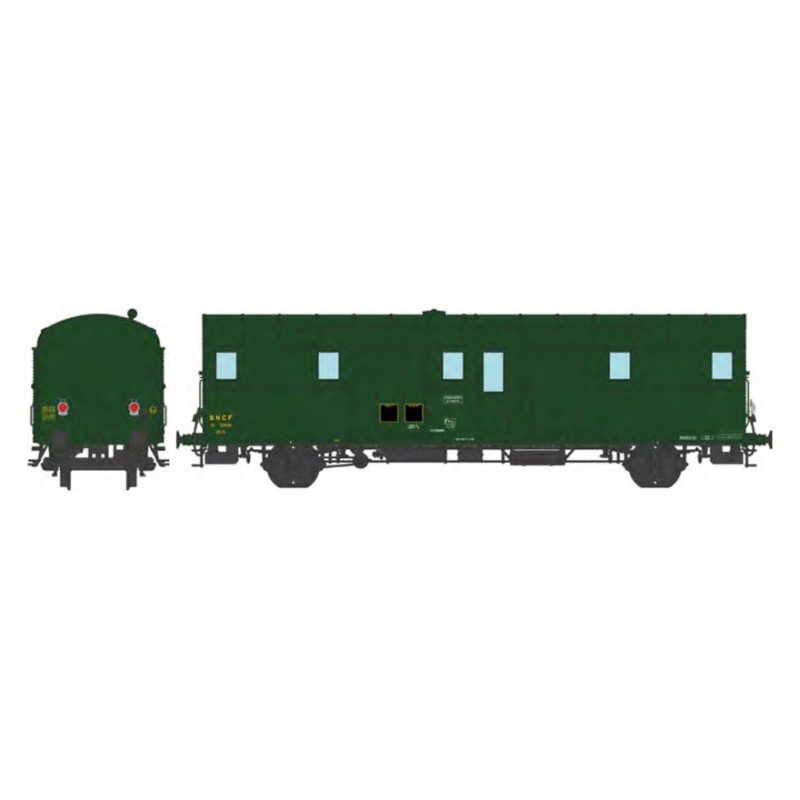
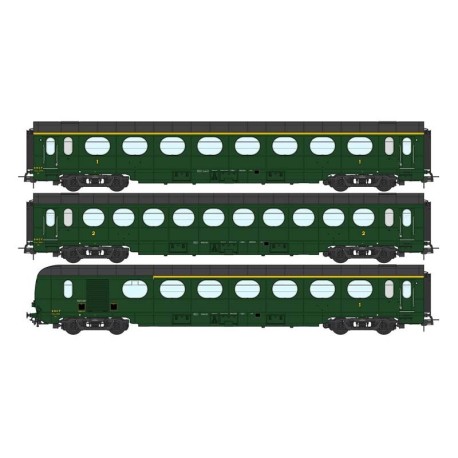
Set of light "saucissons" coaches, SNCF. In "Green 306" color.
The set includes three coaches:
- End coach with luggage compartment B5 Dmyi 34113. Equipped with interior lighting and red tail lights.
- Intermediate coach B10 myfi 34973. Equipped with interior lighting.
- Intermediate coach B10 myfi 34984. Equipped with interior lighting.
Data sheet
Set of light "saucissons" coaches, SNCF. In "Green 306" color.
The set includes three coaches:
- End coach with luggage compartment B5 Dmyi 34113. Equipped with interior lighting and red tail lights.
- Intermediate coach B10 myfi 34973. Equipped with interior lighting.
- Intermediate coach B10 myfi 34984. Equipped with interior lighting.
The lights on the coaches can be turned on and off using a "touch" sensor on the roof.
The light coaches popularly known as “saucissons” (sausages) were a type of hauled rolling stock developed in France during the years following World War II, specifically by the SNCF (Société Nationale des Chemins de fer Français). Their nickname comes from their long, narrow, cylindrical shape, which resembled a sausage, and it remained a common colloquial term among railway workers and enthusiasts.
These coaches were mass-produced starting in the 1950s, using lighter materials and simplified construction techniques, which allowed for low production and maintenance costs. Their design focused more on functionality than comfort, although they provided an efficient solution for routes with lower traffic or less developed infrastructure.
The saucissons were primarily in service from the 1950s to the 1980s, although some lasted longer on rural lines or were converted for other uses (rescue trains, special services, or tourism). They played an essential role in the reconstruction of the French regional railway system and in making rail transport more accessible after the war.
Today, some saucisson coaches are preserved by heritage railway associations or railway museums, where they are valued as historical witnesses to a time of reconstruction and vital public service in rural areas.
Be the first to ask a question about this product!

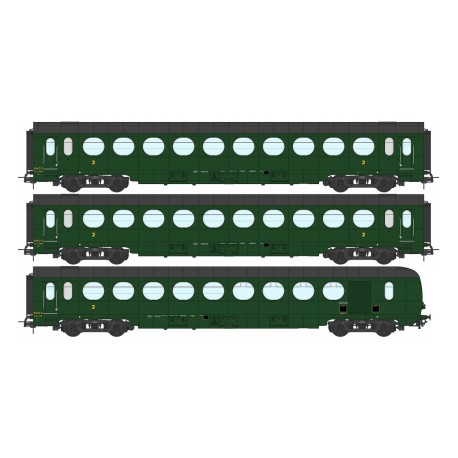
Set of light "saucissons" coaches, SNCF. In "Green 306" color.
The set includes three coaches:
- End coach with luggage compartment B5 Dmyi 34113. Equipped with interior lighting and red tail lights.
- Intermediate coach B10 myfi 34973. Equipped with interior lighting.
- Intermediate coach B10 myfi 34984. Equipped with interior lighting.