



Is Warhammer Tone Pro Worth It? A Complete Guide to the New Color System
Introduction
The world of miniature painting is constantly evolving, and the announcement of Warhammer Tone Pro looks set to be one of Games Workshop’s most striking reveals. The company unveiled this new range during the 2026 Big Autumn Preview event, coinciding with the rebrand of Citadel Colour to Warhammer Colour.
With this launch, Games Workshop seeks to respond to an increasingly competitive market where independent brands have gained a foothold thanks to new formulations and easier-to-understand catalogs.
Tone Pro is not intended to directly replace traditional categories like Base, Layer, or Shade, but rather to offer an alternative designed to improve the painting experience for beginners and seasoned hobbyists alike. The goal is to simplify two of the most common hurdles in miniature painting: choosing the right tones for highlights and shadows, and achieving smooth coverage with notoriously difficult colors, particularly yellows and whites.
1. Five Tones to Master Color Choice
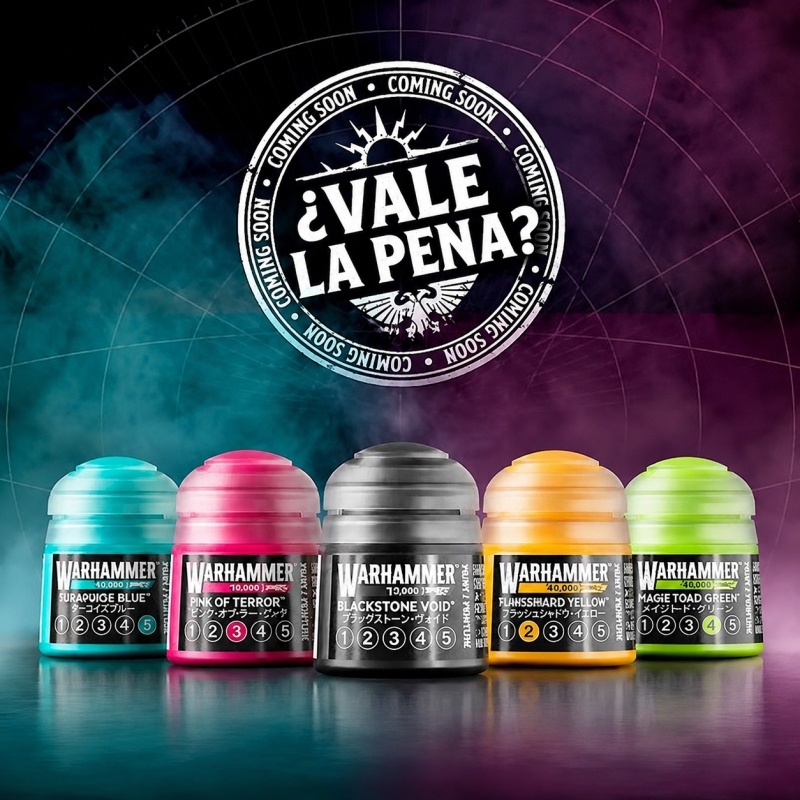
One of the main innovations of Warhammer Tone Pro is its color organization. The premise is straightforward: instead of memorizing various names or constantly referencing guides to see which paints pair together, each color family follows a five-tone scale from darkest to lightest.
According to launch details, the complete range features 150 paints divided into 30 color families. Each family is organized as follows:
- Tone 1 — Deep Shadow: The darkest tone in the family, intended for deep recesses, dark lining, and heavy shading.
- Tone 2 — Mid Shadow: Used to smooth the transition between deep shadows and the main color.
- Tone 3 — Midtone: The defining color of the family, acting as the base coat for most of the surface area.
- Tone 4 — Primary Highlight: Used to brighten areas receiving direct light and build volume.
- Tone 5 — Extreme Highlight: The lightest tone, ideal for edge highlighting, sharp rims, and final spot highlights.
The advantage of this system is a much more intuitive selection process. Memorizing extensive paint names or hunting for matching colors is no longer necessary.
For instance, when painting Ultramarines armor, one can start with Ultramar Blue 1 in the darkest recesses and progress sequentially up to Ultramar Blue 5 on the highest edges. The scale provides a clear reference framework, though final results will still depend on individual technique and preferences.
2. A Formula Designed for Superior Coverage and Ease of Use
Beyond color organization, Tone Pro’s formulation is another major focal point. The range utilizes a fluid acrylic formulation high in fine pigment concentration to deliver solid coverage without clogging fine details.
Key highlights of the formula include:
- High Opacity with Few Layers: Promises smooth, uniform coverage in one or two coats, even over dark primers. This is particularly promising for traditionally difficult shades like Hawkshroud yellows or light tones such as Blackstone Void.
- Self-Leveling Effect: Engineered to spread evenly as it dries, minimizing brush marks and protecting sculpted details. It cures to a subtle satin finish.
- Multi-Technique Versatility: Formulated to handle base coating, transitions, glazing, edge highlighting, and drybrushing using a single paint rather than requiring specialized formulas.
If these qualities hold up in practical use, the range could significantly streamline workflow for hobbyists seeking clean results without complex mixing.
Alongside the paint range, specific auxiliary products and tools are being introduced.
Tone Pro Shading Medium thins pigment concentration for transparent washes and glazes. Meanwhile, Tone Pro Blending Medium extends drying time, giving painters more working window for smooth wet-blending transitions directly on the miniature.
The launch is completed by four synthetic drybrushes in sizes XS, S, M, and L. Featuring dense heads and curved tips, they are designed to improve paint delivery and reduce the chalky finish often associated with drybrushing techniques.
3. Packaging, Retail Impact, and Availability: Points of Discussion
As with most major releases from Games Workshop, Tone Pro has sparked community discussion alongside anticipation, particularly regarding pricing, bottle style, and retail footprint.
The Ongoing Pot vs. Dropper Debate
The choice of packaging remains a talking point. Games Workshop continues to use its signature 12 ml flip-top plastic pots instead of adopting the dropper bottles favored by many independent brands.
Advocates for dropper bottles point out better quantity control, cleaner wet-palette use, easier mixing, and airbrush compatibility, while avoiding dried paint buildup around the rim. Conversely, supporters of the traditional pot appreciate being able to load paint directly onto the brush without secondary tools.
Ultimately, it comes down to personal workflow preferences, though packaging design remains a decisive factor for many painters.
Retail Shelf Space Challenges
Introducing 150 new SKUs presents a logistical challenge for independent hobby shops. Housing the complete rack requires significant display real estate, which can be difficult for smaller brick-and-mortar stores.
The situation is further complicated by potential adjustments or retirements within the existing Contrast line. Retailers face the challenge of allocating shelf space while deciding which references to stock consistently.
Improving Accessibility for Beginners
Despite these debates, the numbered system makes the painting process markedly less intimidating for newcomers.
Knowing that Tone 1 represents the deepest shadow and Tone 5 the brightest highlight removes guesswork and allows painters to focus directly on brush control. It simplifies the learning curve without requiring extensive color theory memorization.
Furthermore, the higher fluidity and self-leveling properties may assist hobbyists working on motor precision. Overall, Tone Pro shows strong potential for improving entry-level accessibility, though true performance will be measured under real painting conditions.
Release Date
This product line will be available in our shop on its official launch day, October 24, 2026.
Conclusion
Warhammer Tone Pro represents Games Workshop’s bid to make miniature painting more accessible and structured without compromising end quality. Its core strength lies in combining an intuitive color-scaling system with a fluid, high-coverage formula designed to reduce brush marks.
While particularly appealing to painters seeking simplified highlight triads or working on fundamental techniques, factors like cost per milliliter and the continuation of flip-top pots will remain points of consideration for the community.
In the end, practical performance on the painting bench will determine its success—because regardless of how well a catalog is organized, painters are ultimately won over by how a paint behaves when the pot opens and the brush hits the miniature.
Share this content