




Board Game Types: A Complete Guide to Choosing the Right One
If you are new to the world of board games or want to discover new gaming experiences, it is completely normal to have doubts when coming across terms like eurogame, ameritrash, cooperative, or party. Each of these refers to a different way of enjoying a match, and knowing their differences will help you choose the game that best fits your tastes and those of your gaming group.
In this guide, we review the main types of board games, explaining what characterizes each one, what kind of experience they offer, and which type of players they are recommended for. Whether you are looking for a game to enjoy with family, an adventure full of excitement, or a strategic challenge, you will find the perfect starting point right here.
Why Are There So Many Types of Board Games?
The world of board games has evolved tremendously over the last few decades. While a few years ago the selection was limited to a few classics, today thousands of titles exist, capable of satisfying practically any type of player.
This evolution has given rise to different categories that help quickly identify the style of experience each game proposes. Some are designed for those who enjoy planning every single move, others stand out for their narrative, some encourage cooperation among all participants, and others simply look to spark laughter around the table.
It is important to understand that these categories are not watertight compartments. A single game can share characteristics from several types at once. For example, a game can be both cooperative and narrative, while another might combine elements typical of a eurogame with a highly immersive theme.
It is also worth dispelling a widespread misconception: talking about "strategy games" as if they were a separate, independent category. In reality, strategy is present, to a greater or lesser extent, in almost all modern board games. The difference lies not in whether a game has strategy, but in how it frames the gameplay experience and which aspects it prioritizes during the match.
That is precisely why we talk about eurogames, ameritrash, cooperative games, or family games, as these categories describe the actual experience the player will live through much more accurately.
Game Types and Mechanics: Are They the Same Thing?
One of the most common confusions among beginners in the hobby is thinking that game types and mechanics are exactly the same thing. Although they are related, they describe completely different aspects.
The game type refers to the overall experience it proposes. It helps us understand what we are going to feel during the game, what its design philosophy is, or what kind of interaction we will find among the players.
On the other hand, mechanics are the rules and systems that make the game work. Concepts like worker placement, deck building, drafting, area control, or engine building do not describe a genre, but rather the way the match unfolds.
In fact, the exact same mechanic can appear in very different games. By the same token, one eurogame can utilize completely different mechanics than another eurogame.
In this guide, we will focus exclusively on the main types of board games.
If you want to delve deeper into how board games function, it is also essential to understand their mechanics. While game genres help us identify the overall experience a title offers, mechanics dictate how gameplay unfolds and what decisions players can make. Concepts such as worker placement, deck building, drafting, or area control appear across many different game categories. You can discover how these and other mechanics work in our guide on board game mechanics.
Eurogames: Where Every Decision Counts
Eurogames, also known as German-style board games, are probably the type of game that has contributed the most to the growth of the modern hobby. They are characterized by giving a prominent role to player choices, reducing the influence of luck, and rewarding mid- to long-term planning.
Instead of relying on a lucky dice roll or a particularly powerful card draw, success in a eurogame usually comes thanks to good resource management, efficient planning, and the ability to adapt to the actions of the other players.
This does not mean that luck disappears completely. In many titles, there is a certain amount of uncertainty, but it normally acts as an element that forces you to rethink your strategy, rather than the factor that decides the winner of the game.
Another common characteristic is that player interaction is usually indirect. Instead of constantly attacking one another, participants compete for limited resources, positions on the board, or specific actions, which generates constant tension without the need for direct conflict.
What Is a Match of a Eurogame Like?
Matches usually develop progressively. During the first few turns, players build up their strategy, develop their economy, or set up their game engine, while in the second half, they try to maximize the efficiency of every action to score the highest possible amount of victory points.
It is common to finish a match with the feeling that "if I only had one more turn, I could have done so many more things," which is one of the hallmarks of this type of game.
Will You Like Eurogames If...?
- You enjoy planning several turns in advance.
- You prefer choices to carry more weight than luck.
- You like optimizing resources and searching for the most efficient strategy.
- You value games where every single action has consequences.
Some Well-Known Eurogames
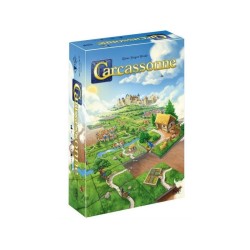
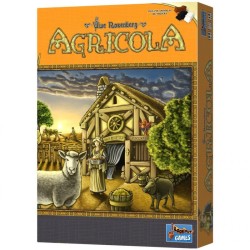
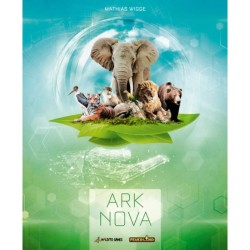
Among the most representative titles, we find authentic benchmarks of the hobby such as Catan, Carcassonne, Agrícola, o Ark Nova. Although each one proposes a distinct experience, they all share that core philosophy based on planning and decision-making.
Ameritrash: Excitement Above All Else
If eurogames focus on optimization and planning, ameritrash games seek to make every match an adventure. In this type of game, the theme plays a starring role, and everything is designed to make players feel like part of the story.
Spectacular miniatures, combat, exploration, characters with unique abilities, dice, event cards, and unexpected twists are some of the most common elements in this style of game.
Luck usually has a greater presence than in eurogames, but far from being a flaw, it is part of the experience. Uncertainty generates tension, epic moments, and memorable situations that ensure every match is different.
This does not mean there is no strategy involved. A good ameritrash game also forces you to make important decisions, manage resources, and coordinate with other players when the adventure demands it. The difference is that the story and the emotions usually carry as much weight as the victory itself.
What Is a Match of an Ameritrash Game Like?
Instead of calculating every move down to the millimeter, players usually face changing situations where they must constantly improvise. It is common for unexpected enemies to appear, events to alter the game state, or narrative choices to change the course of the adventure.
These are games where, upon finishing the match, players often remember the anecdotes and stories lived through much more than the final score.
Will You Like Ameritrash If...?
- You enjoy stories and deep thematic settings.
- You love miniatures and spectacular components.
- You do not mind a certain degree of uncertainty or luck.
- You look to experience different adventures in every game.
Some Well-Known Ameritrash Games
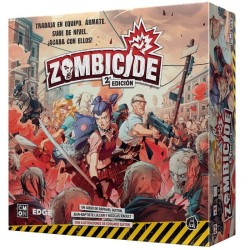
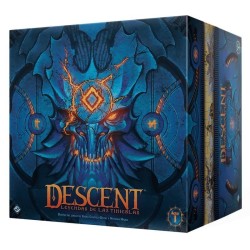
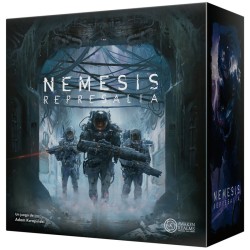
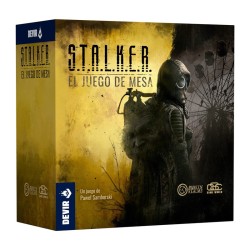
Among the great representatives of this style, we find titles like Zombicide, Descent, Nemesis o S.T.A.L.K.E.R. games capable of offering highly immersive experiences packed with memorable moments.
Cooperative Games: Where Everyone Wins or Everyone Loses
In cooperative games, competition between players disappears. Instead of facing off against one another, everyone forms a team with a common goal and must collaborate to overcome the challenges posed by the game itself.
This approach completely changes the way you play. Communication, coordination, and joint decision-making become far more important than trying to outdo the other participants. Each player usually takes on a different role, with unique abilities that complement those of the rest of the team.
The difficulty is driven by the game itself, which acts as an invisible opponent. Depending on the title, that challenge might consist of stopping a pandemic, surviving on an island, completing a space mission, or solving a mystery before it is too late.
One of the great virtues of cooperative games is that they easily integrate players with different levels of experience. By sharing goals, participants can help each other and learn as the game progresses.
Mind you, some cooperative games can give rise to what is known as the alpha player effect, a situation where a more experienced player ends up making most of the choices for the group. The best modern designs try to avoid this problem by introducing hidden information or limiting communication between players.
What Is a Match of a Cooperative Game Like?
The overriding feeling is that of teamwork. Every choice is debated among everyone, and success depends on coordinating each player's actions well. Victories feel especially satisfying because they are the result of a collective effort, while defeats invite the group to analyze what could have been done better to try again.
Will You Like Cooperative Games If...?
- You prefer collaborating over competing.
- You enjoy solving puzzles and problems as a group.
- You like debating strategies with other players.
- You look for a shared experience where everyone participates actively.
Some Well-Known Cooperative Games
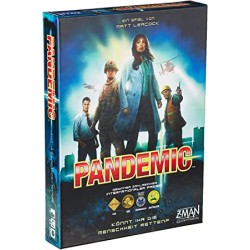
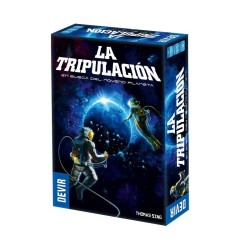
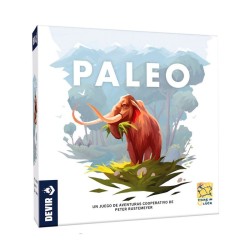
Among the most popular titles, we find Pandemic, Sherlock , The Crew o Paleo, though nowadays practically every genre boasts excellent cooperative offerings.

Family Games: Fun for All Ages
Family games are designed to gather players of widely different ages and experience levels around the table. Their main goal is to offer accessible rules, dynamic matches, and interesting choices without becoming overly complex.
It is often thought that a family game is a children's game, but they are very distinct concepts. A good family game is designed to be enjoyed by both a child and an adult, offering enough depth so that all participants have fun regardless of their background.
Precisely because of this ability to adapt to very diverse audiences, they usually become the perfect gateway into the modern hobby.
Their rules can customarily be explained in just a few minutes, and matches rarely drag on excessively, making them easy to bring to the table frequently.
What Is a Match of a Family Game Like?
The learning curve is usually very smooth. After a few turns, all players understand the rules and can focus on enjoying the game. While decisions do matter, the ruleset avoids adding unnecessary complexity to maintain a brisk, accessible pace.
Will You Like Family Games If...?
- You look for games to share with people of different ages.
- You want to learn how to play in just a few minutes.
- You prefer fast-paced games that are easy to get to the table.
- You are just starting out in the hobby.
Some Well-Known Family Games
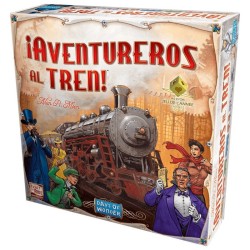
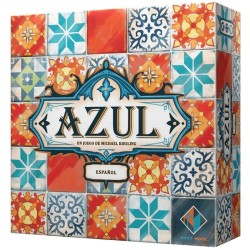
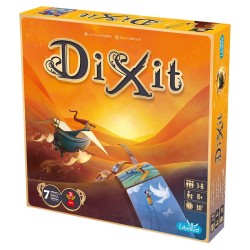
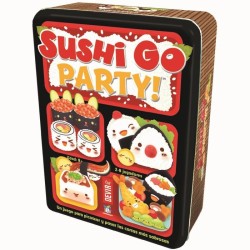
Among the best representatives of this category, titles like Ticket to ride, Azul, Dixit o Sushi Go! stand out, proving that simple rules can offer highly entertaining games.
Party Games: Shared Fun and Laughter
If there is one category designed to gather a crowd around a table, it is party games. These are games that are quick to explain, easy to learn, and focused on generating hilarious situations that all participants will remember long after the game ends.
Unlike other types of games, strategy usually takes a back seat here. What matters most is player interaction, communication, creativity, or the ability to improvise.
Many party games also allow you to easily onboard players who have never tried a modern board game, making them an excellent choice for family gatherings, celebrations, or get-togethers with friends.
What Is a Match of a Party Game Like?
Matches are fast, dynamic, and full of interaction. The rules require almost no explanation, and the game's pace is regularly driven by conversations, laughter, or friendly challenges between participants rather than the game board itself.
Will You Like Party Games If...?
- You regularly play in large groups.
- You look for quick and highly dynamic matches.
- You prefer constant interaction between players.
- You want to pull out a game that anyone can enjoy from the very first minute.
Some Well-Known Party Games
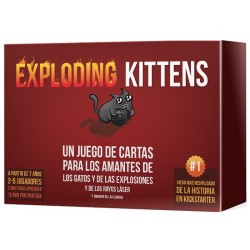
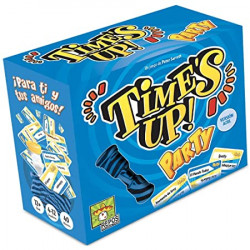
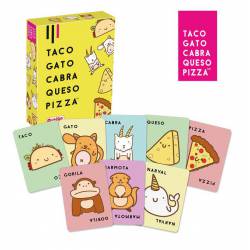
Some of the great classics of this type include Codenames, Exploding Kittens, Time's Up! o Taco, Cat, Goat, Cheese, Pizza although the selection is huge and new options appear every year.

Abstract Games: Strategy in Its Purest Form
Abstract games strip theme down to the bare minimum to focus all attention entirely on player choices. Their rules are usually very easy to learn, but mastering them requires keen observation, planning, and plenty of practice.
In this type of game, the story being told matters far less than the intellectual challenge presented. Every move has consequences, and players must constantly anticipate their opponents' decisions.
One of their great advantages is that they typically offer enormous replayability. With just a few rules, they are capable of generating a virtually unlimited number of distinct situations.
What Is a Match of an Abstract Game Like?
Matches are normally quick, feature very little reliance on luck, and offer high player interaction. Every single choice can completely alter the course of the game, turning each turn into a mini strategic puzzle.
Will You Like Abstract Games If...?
- You enjoy solving mental challenges.
- You prefer games where practically everything depends on player choices.
- You like simple rulesets that pack a lot of depth.
- You look for games with high replayability.
Some Well-Known Abstract Games
Among the most representative titles, we find Hive, Santorini, Quoridor, and Azul—the latter considered by many to be an excellent example of an abstract game with a strong family-friendly appeal.
Narrative Games: Living a Story Match After Match
In narrative games, the story holds as much importance as the rules themselves. Players do not just try to reach a goal; they explore a world, make meaningful choices, and discover how their actions influence the development of the adventure.
Customarily, these games unfold over several sessions, forming a campaign. Each match represents a new chapter of the story, allowing new characters, scenarios, items, or challenges to appear as the adventure moves forward.
Within this category, it is common to find games in a Legacy format. In these, choices made during the campaign permanently alter certain elements of the game via new cards, stickers, sealed envelopes with secret content, or physical changes to the board.
Not all narrative games are Legacy, nor do all Legacy games have a heavy narrative focus, but both share the concept of building an experience that evolves over time, where the group's decisions have lasting consequences.
What Is a Match of a Narrative Game Like?
Rather than playing a standalone match, players live through a new episode of a constantly evolving storyline. The sense of progression makes each session feel important and leaves the group wanting to meet up again to find out what happens next.
Will You Like Narrative Games If...?
- You enjoy stories and deep atmospheric world-building.
- You like developing campaigns over multiple sessions.
- You regularly play with the exact same gaming group.
- You look for immersive experiences with continuity.
Some Well-Known Narrative Games
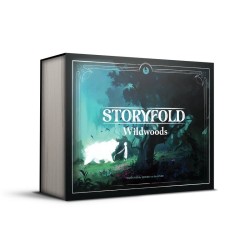
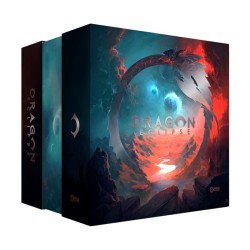
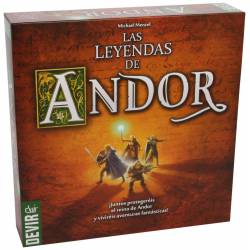
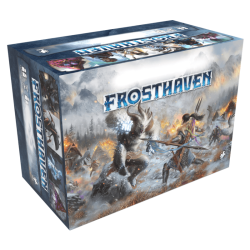
Among the most prominent titles are Storyfold, Dragon eclipse, Leyends of Andor o Frosthaven. When it comes to Legacy experiences, some of the absolute benchmarks are Pandemic Legacy, Clank! Legacy, and Charterstone.
Which Type of Board Game Fits You Best?
After learning about the main categories, you might still have doubts about which one to choose. The following table summarizes the characteristics of each game type and can serve as a starting point to find the experience that best adapts to your tastes and those of your group.
| If you are looking to... | Choose... | Because... |
|---|---|---|
| Plan every move and optimize resources | Eurogames | They reward choices and planning over luck or chance. |
| Live through adventures full of excitement | Ameritrash | The theme, the narrative, and epic moments take center stage. |
| Play as a team | Cooperative | All players collaborate to beat the challenges posed by the game. |
| Share games with people of any age | Family Games | They are quick to learn and highly accessible for all types of players. |
| Host gatherings with friends and lots of laughs | Party Games | The rules are simple, and player interaction is non-stop. |
| Face mental challenges with few rules | Abstract Games | Strategy and anticipation are the real stars of the show. |
| Dive into stories that evolve with each match | Narrative Games | They allow you to live out immersive campaigns where choices matter. |
Which Is the Best Type of Board Game?
There is no single category that is inherently better than another. The choice will depend entirely on the experience you are looking for at any given moment and, above all, on the people you are going to play with.
Some groups enjoy spending two or three hours planning every single move in a deep eurogame, while others prefer living a cooperative adventure or breaking out a party game to liven up a gathering of friends. It is even quite common for the same gamer to enjoy completely different styles depending on the occasion.
That exact variety is one of the greatest strengths of this hobby. There is always a right game for every group, every moment, and every way of defining fun around a table.
Frequently Asked Questions About Board Game Types
What is the best type of board game for beginners?
If you have never played modern titles, family games are usually the best option. Their rules are straightforward, matches are brisk, and they allow you to discover many of the feelings the hobby offers without a steep learning curve.
Can a single game belong to multiple categories?
Yes. In fact, it is quite common. A game can be cooperative and narrative at the same time, while another might share traits of both a eurogame and a family game. Categories help identify the predominant experience, but they are not rigid classifications.
What is the difference between a eurogame and an ameritrash game?
Eurogames generally place a higher priority on planning, resource management, and action optimization, whereas ameritrash games put the focus on theme, narrative, and unpredictable situations that arise during the game.
What is the difference between a game type and a mechanic?
The game type describes the overall experience a title proposes, while mechanics explain how it functions internally. For example, a eurogame might use mechanics like worker placement or engine building, just as a cooperative game might incorporate action management or exploration.
Are all modern board games complicated?
No. Today, games exist for practically every experience level—from titles that can be learned in five minutes to authentic brain-burners for expert players. Choosing the right type of game is the best way to ensure you enjoy it from the very first match.
Discover the Type of Game That Fits You Best
Knowing the main types of board games is the first step toward discovering a hobby that offers widely different experiences. Whether planning every move in a eurogame, working together to beat a cooperative challenge, or living out a grand narrative adventure, you will always find a game capable of surprising you.
If you are thinking about expanding your collection or want to dive into this exciting world, explore our catalog and discover games for all levels, ages, and playstyles. Finding the perfect title is much easier when you know exactly what kind of experience you are looking for.
Still Don't Know Which Game to Choose?
Finding the perfect board game is not always easy. Every gaming group is different, and quite often, a small recommendation can make the difference between a successful purchase and a game that barely hits the table.
If you have questions about which type of game best fits your tastes, are looking for a gift, or need a personalized recommendation, we will be delighted to help you. You can get in touch with our team through our contact form. Tell us who you are going to play with, how many of you there are, or which games you have enjoyed so far, and we will help you find the option that best fits your group.
Share this content